Lost in time: how company and research data quietly disappears
Nobody deletes it on purpose. It simply stops being looked after, and one day it is gone.
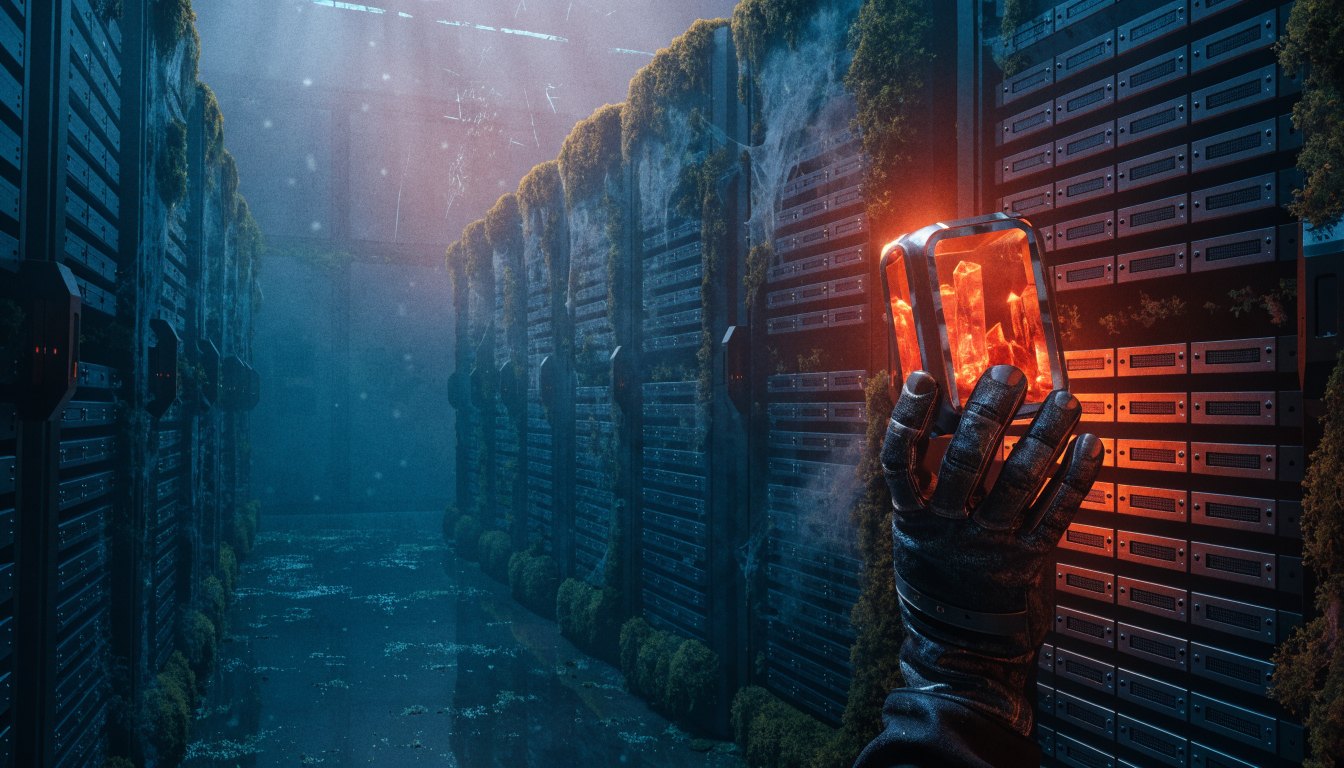
Picture made for ABURA Bureau.
Digital records feel permanent, but they are not. Pew Research Center found that 38% of web pages that existed in 2013 could no longer be reached ten years later.
Research data fares no better. A study in Current Biology asked for the data behind 516 papers and found the odds it still existed fell by 17% for every year after publication. Another study found that one scientific article in five points to web material that has since vanished or changed.
The reason is rarely a decision. People move on, laptops are wiped, servers are switched off and nobody is clearly responsible. UNESCO warned in 2003 that digital heritage is at risk of being lost to posterity for exactly these reasons.
Company data is most at risk when a company closes or a project ends. The people who knew what the files were, and why they mattered, leave first.
It does not have to end that way. When a farm data company closed in 2024, its data sets survived because another company bought them at auction.
What helps: know what you hold and where it sits, keep it in one place with a note of what it is, check who holds the rights, and decide early whether to license it, sell it or give it, while the people who understand it are still around.
Know where a closed company's data is?
Start on abura.io- Pew Research Center, "When Online Content Disappears" (17 May 2024)
- Vines and others, Current Biology 24 (2014)
- Klein and others, "Scholarly Context Not Found", PLOS ONE (2014)
- UNESCO, Charter on the Preservation of Digital Heritage (2003)
- AgFunderNews, on a farm data company's assets sold at auction (21 November 2024)